Total recall
Every read is stored and searchable. String them together and you have a map of where you sleep, pray, work, protest, and get medical care.
RECORDING · NEW YORK STATE
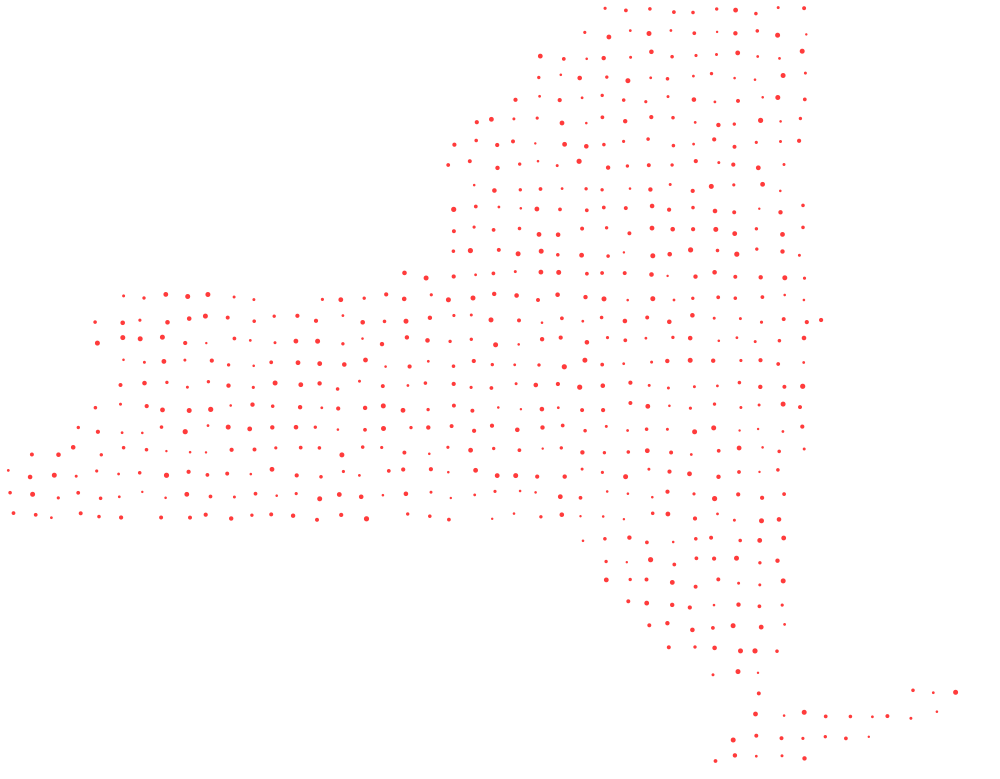
More than 4,500 automated license plate readers are already watching New York's roads. They photograph you, keep the record, and share it with agencies you've never heard of. Find the ones near you. Then tell the people who signed the contract.
Why it matters
Automated license plate readers (ALPRs) are AI cameras that capture every passing vehicle: plate, make, model, color, dents, bumper stickers, the time, and the place. No warrant. No suspicion. No opt-out.
Every read is stored and searchable. String them together and you have a map of where you sleep, pray, work, protest, and get medical care.
Vendors like Flock Safety let thousands of agencies nationwide search your town's data. Once it leaves, no local rule applies.
Officers have run ex-partners through it. Agencies have used it to track protesters, follow journalists, follow patients across state lines, and feed immigration dragnets. Misread plates have put innocent families in handcuffs.
"The question isn't whether you have something to hide. It's whether a private company and a few thousand strangers with a login should have a diary of your life."
The dragnet
No single plate reader knows much. But the technocratic state doesn't run single cameras. It runs networks: Flock's nationwide sharing pool, county intelligence "fusion centers," toll gantries, transit readers, and private cameras at big-box stores and gated communities, all feeding the same searchable databases. Add cell-tower records, purchased location data, and facial recognition, and every trip you take becomes a row in a permanent file.
Stitch the rows together and the file answers questions nobody should be able to ask without a warrant: where you sleep and who sleeps there too; which house of worship you attend and how often; whether you've been to a clinic, a cannabis dispensary, a gun shop, a divorce lawyer, an AA meeting; which protests you showed up to; who you visit at 2 a.m. That is your most sensitive life, compiled by default, retained by policy, and shared with agencies you can't name, on the theory that you might someday be a suspect.
Then comes predictive policing. The same file that describes your past is fed to software that scores your future. Vendors sell "pattern of life" analytics, "hot lists," and neighborhood risk maps built from plate reads, so patrols, stops, and investigations are aimed at people and blocks an algorithm flagged before anyone did anything. Every stop generates more reads, which raise the score, which sends more patrols. It is a feedback loop that manufactures suspicion, and it lands hardest on the streets that were already over-policed.
Nobody voted for a statewide surveillance network. It was assembled one contract at a time, sometimes as a line in a budget that never got a vote of its own, and the people who work in and drive through these towns never got a say at all.
New York by the numbers
Counts come from OpenStreetMap, the open registry DeFlock volunteers use to map plate readers. It is an undercount: cameras only appear once someone finds and reports them.
Snapshot generated . Source: OpenStreetMap contributors via the Overpass API, the same dataset behind deflock.org.
Find cameras
Search by address, town, or ZIP code. We'll list every known reader within your chosen radius, who operates it, and what it does with your data.
Places in New York that ended, paused or restricted their plate readers. Newest first, from the news archive.
Show on the map Wins, setbacks and fights still goingCameras by county
Every county has its own page with counts, vendors, operators and the towns with the most readers.
In the news
Officers tracking ex-partners. Data quietly handed to federal agents. Towns cancelling contracts once residents found out. Updated automatically from news coverage, with New York stories first.
Every feed updates with the site, every two hours, and carries the 60 most recent stories. Paste a link into any feed reader.
Each county page also links to its own feed.
Headlines gathered every 2 hours from Google News, Bing News, the GDELT news index and two dozen New York outlets, filtered to Flock Safety and license plate reader coverage and tagged by county. Stories covered by several outlets are shown once. Last updated . Links open the original outlet.
Legislation
Plate-reader and surveillance bills in Albany, where each stands, and what to tell your legislators. Refreshed from the NY Senate.
Community calendar
Board votes, hearings, protests, and the sales pitches dressed up as "information sessions". Verified by volunteers, with alerts for your area.
Speaking at a meeting? Watch how others did it. Want a notice when something is scheduled near you? Get alerts.
Pushback
Public comment, board meetings and rallies, on video. Watch how it's done before your town's next vote.
Groups near you
Organizations, meetups and online communities already pushing back across the state. Find yours, or list it.
Updates from us
Releases, explainers, and the campaigns that need hands. The short version here; the whole story on the updates page.
Take action
Enter your details once. We'll find your town, county, State Senate and Assembly districts, and Congressional district, and pre-write messages to each of them, plus the Governor, Attorney General, both U.S. Senators, and the President. Edit anything. Then send.
Report a tip
Officers misusing camera data. A board quietly approving new readers. A rally, a hearing, a vote. Tell us what's happening in your town. Volunteers verify every tip before it's listed here, and we never publish who sent it.
Join the pushback
Leave your details and we'll connect you with neighbors organizing against surveillance cameras in your area, and let you know when your town or county takes it up.
Frequently asked questions
Yes. New York has no statute that specifically limits automated license plate readers (ALPRs), so towns, counties, police departments and private businesses can install them without a public vote. What limits exist come from local decisions: a board can decline a contract, add retention and sharing rules, or cancel a contract that is already running. That is why the contract vote at your town or county board is where the leverage is.
Flock’s standard contract keeps every plate read for 30 days, then deletes it unless it was saved to a case. Agencies can choose longer periods, and some in New York have. The NYPD, which uses a different vendor, retains plate reads for five years. The exact number for your area is in the contract, which is a public record you can request under FOIL.
Usually far more agencies than the one that bought the cameras. Flock’s network lets any participating agency search plate reads from any other agency that has turned on sharing, across state lines, and federal agencies have obtained access through local partners. Ask your town for its data-sharing settings and its list of external searches; both are public records.
Type your address or ZIP code into the search on this page. It lists every reader mapped within the radius you pick, with the operator where known, and shows them on a map. If your town isn’t listed, that may mean nobody has mapped its cameras yet; a walk past the main roads looking for pole-mounted cameras with a small solar panel usually finds them, and you can add them to DeFlock.
New York’s Freedom of Information Law (Public Officers Law Article 6) lets anyone request records from any state or local agency, no reason required. Send a written request to the agency’s records access officer asking for the ALPR vendor contract, the data retention and sharing policies, and audit logs of searches. The agency must acknowledge within five business days. The Take Action tool on this page drafts the request for your town and county with the right recipient.
Three things work. Show up: a handful of residents at a town or county board meeting changes votes on renewals. Write: this site drafts letters to your town, county, state and federal representatives from your address. Watch: report new cameras and any misuse you see, so the map and the record stay current. Several New York communities have declined or cancelled contracts after residents pushed back.
General information, not legal advice. Retention periods and sharing settings vary by contract; the contract itself is the source of truth and is obtainable under FOIL.